This guide explains how to evaluate the meaning of 19655 and make informed supplier decisions using practical, objective criteria. In the background, the keywords relate to product sourcing workflows, specification alignment, and supplier qualification practices commonly used in procurement and manufacturing. You’ll also find a structured comparison and requirements section to help you assess fit and risk.

When people reference 19655 in procurement discussions, they are usually signaling a specific product line, specification code, part identifier, or internal catalog reference that matters for traceability and ordering accuracy. In practical terms, the value acts as the anchor for three questions: What exactly is being sourced?, Which suppliers can meet the requirement reliably?, and How should you verify quality before purchase? Because sourcing errors are often costly—especially when documentation, dimensions, materials, or compliance expectations differ—clarity around 19655 should be treated as a critical starting point rather than a minor detail.
Alongside that reference, the surrounding keywords (provided in the prompt) function as thematic placeholders for sourcing topics such as product matching, supplier selection, and procurement documentation. Even without explicit textual labels, the underlying procurement logic remains the same: your job is to convert identifiers and supplier claims into measurable, verifiable requirements.
In other words, procurement teams don’t “interpret” an item code in an informal way. They use item codes to drive a controlled chain of information: item master definition → purchasing document → supplier quote/acknowledgement → receiving/inspection plan → acceptance records → (if needed) nonconformance and corrective action documentation. When 19655 is involved, any break in that chain can produce the classic procurement failure: the organization pays for a part that arrives, but the part is not the part that engineering, operations, quality, or compliance expected.
In sourcing operations, supplier choice directly influences cost stability, delivery performance, and the probability of rework. An identifier like 19655 often appears in requests for quotation (RFQs), engineering change records, or inventory systems—so suppliers must demonstrate that they can supply the correct item consistently. If your supplier selection is based only on responsiveness or price, you risk receiving an equivalent rather than the exact match, which can trigger downstream incompatibilities.
Many teams learn this lesson the hard way: a “near enough” product can pass a superficial visual check but fail a functional test later. That might mean a fit problem (mechanical interfaces don’t match), a material mismatch (performance degrades under load, temperature, or chemical exposure), or a documentation mismatch (audit readiness fails because certificates are missing or don’t match the lot). Once a purchase goes into production—or even into a staged integration test—corrective action can become expensive.
From an industry perspective, the very defensible supplier qualification process typically includes: (1) documentation verification (spec sheets, material certifications, test reports), (2) process capability assessment (how reliably they produce at the required tolerances), and (3) contract terms that address change control and traceability.
It’s helpful to frame supplier selection around 19655 as a risk-based exercise. Some item categories are forgiving: for example, commoditized materials with clear equivalency standards and low compliance burden. Other item categories are strict: engineered components with tight tolerances, regulated materials, or safety-critical assemblies. Your supplier strategy should match that risk profile. Even if two suppliers both claim “we can do 19655,” the evidence required to trust that claim will be different depending on where the part is used and what happens if it is wrong.
Many organizations use catalog numbers, engineering references, SKU strings, or internal part IDs—like 19655—to reduce ambiguity across departments. In mature procurement environments, these identifiers connect to a structured item master record containing technical fields (e.g., composition, dimensions, performance criteria), purchasing metadata (lead time ranges, packaging requirements), and quality documentation rules. When a supplier cannot align with the item master record, the “low price quote” may become the very expensive outcome after returns, replacement shipments, and schedule slippage.
This structured approach also supports auditability. Auditors (internal or external) want to see that a company is capable of controlling what it buys and that it has a rational basis for supplier acceptance. Item codes like 19655 are the “keys” that allow you to demonstrate compliance: they show what was requested, what was supplied, and how you verified it.
To keep this guide objective, it’s worth noting that public industry performance numbers vary by sector and region. Rather than inventing figures, this article focuses on principles widely documented by procurement and quality standards communities, such as ISO frameworks and established supplier quality practices.
In practice, the most important “industry context” is that expectations become stricter as you move from noncritical purchases toward critical systems. A supplier that is acceptable for a low-risk consumable might not be acceptable for a critical component with traceability obligations. Conversely, a supplier that looks expensive might be cheaper in total because their documentation compliance and defect rate reduce your internal cost of quality.
To make supplier selection around 19655 more reliable, start by ensuring the identifier maps to a single, well-defined product. The practical checks below are the ones very commonly used in professional purchasing and quality assurance workflows.
In many procurement systems, these criteria are translated into a formal evaluation scorecard: technical alignment score, documentation compliance score, traceability readiness score, and responsiveness to nonconformance. The scorecard is then tied to purchasing authority: higher risk items require higher supplier approval levels or formal supplier qualification status.
Even when a reference like 19655 is associated with a specific quoted price (such as “price information” shared during the RFQ process), professional buyers treat price as one input among several. The reason is straightforward: the effective total cost of procurement (often called “landed cost” and expanded to include quality and logistics risk) reflects not only the unit amount but also the probability of defects, return logistics, schedule impact, and administrative effort.
Consider a common scenario: Supplier A is cheapest but provides incomplete documentation. Your receiving team must hold inventory pending certificate verification, and your quality team must follow up for corrections. If documents are corrected after a delay, you may be unable to release inventory for production use until the documentation is valid. Those days of hold time can become a production schedule issue.
Now consider a different scenario: Supplier B is slightly more expensive but includes robust traceability labeling, and their certificates match the delivered lots without rework. Even if the unit price is higher, the “cost of quality” and “cost of delay” can make Supplier B the better procurement decision.
Industry guidance consistently emphasizes that supply chain risk management is part of procurement economics. For example, ISO 9001 focuses on quality management principles and evidence-based control of processes, while supplier evaluation practices are often aligned with those quality principles.
In practical decision-ready terms, it’s often useful to treat procurement as a set of trade-offs. If a lower price comes with higher risk of nonconformity or documentation delays, you can approximate the expected cost: (unit price + expected rework/hold cost + expected downtime cost + administrative cost). Even if you don’t compute a precise expected value, you can still use structured qualitative risk scoring to decide.
To reduce uncertainty around 19655, your supplier diligence should produce a clear “yes/no” for each requirement. The questions below are designed to elicit verifiable responses rather than marketing statements.
As a practical tactic, align these diligence questions with your receiving plan. If your receiving plan requires a specific test or a document, ask about it during diligence. That alignment prevents the most frustrating scenario: the supplier never knew they were supposed to provide the document or perform the test, and you only find out at shipment time.
The prompt includes a rule: if a location such as “city” or “country” appears in keywords, replace it with "nearby." In practice, many buyers also prefer geographically closer sourcing—often not for cost claims, but for reduced logistics uncertainty and faster communication when quality issues arise.
“Nearby” supplier responsiveness is especially relevant in contexts where inspection timelines or document corrections must happen quickly. In many procurement cultures, this includes the expectation that suppliers can coordinate promptly with quality teams during receiving inspections and audit preparation.
When 19655 is tied to documentation compliance, faster shipping of corrections can reduce inventory hold times. If a certificate has a minor mismatch (for example, wrong revision identifier, wrong lot reference, or incomplete test data), the ability to correct documents quickly can prevent production delays. Nearby sourcing also supports faster containment actions in the event of a nonconformance: the supplier can help interpret records, assist with corrective action, and propose containment and disposition options.
However, “nearby” should not automatically mean “best fit.” If the closest supplier cannot demonstrate traceability, process controls, or correct spec alignment, distance won’t solve the fundamental quality risk. It’s best treated as an operational advantage that supports better overall outcomes when quality requirements are met.
Below is a structured comparison that helps you decide how strictly to qualify suppliers for an item referenced as 19655. Adjust the “conditions/requirements” according to your risk level and the criticality of the part/product in your process.
| Supplier Approach | Top Fit When | Conditions / Requirements |
|---|---|---|
| Documentation-First Verification | The product is well-defined and acceptance relies mainly on certificates and specs. | Require certificates aligned to 19655, confirm version/revision, and verify labeling/packaging documentation. |
| Process & Capability Assessment | Performance or tolerance requirements are tight, or prior inconsistencies exist. | Request evidence of process controls, sampling/inspection plans, and corrective action history tied to similar SKUs. |
| Trial Batch / Pilot Order | You need practical confirmation before full-volume purchasing. | Define acceptance criteria, require lot traceability, and include contingency terms for nonconformity and rework. |
| Ongoing Supplier Performance Review | Good supply is expected and you want stable quality and lead time. | Set measurable KPIs (quality rate, on-time delivery, document compliance) and specify audit cadence and escalation steps. |
This table gives you a set of procurement “modes.” A decision-ready buyer will often combine modes. For example, for a critical item they might require process capability evidence and also do a pilot order before volume. Or they might start with documentation-first verification but upgrade to ongoing performance reviews and audits once the supplier demonstrates stability.
Another useful decision lever is the “qualification depth.” Some organizations qualify suppliers at the corporate or plant level (general capability). Others qualify at the item level (specific capability to supply 19655). Item-level qualification usually requires evidence that the supplier can manufacture that specific item, with its specific revision, and maintain conformity over time.
Use this step-by-step workflow to translate 19655 (and the surrounding sourcing keywords) into a supplier decision you can justify internally.
To make this process truly decision-ready, consider creating a one-page internal procurement dossier for 19655. That dossier should include: the item master mapping, the RFQ and response snapshots, acceptance criteria summary, documentation requirements list, sample/inspection results (if applicable), and the final supplier selection rationale. In reviews by quality or finance stakeholders, that dossier reduces friction and improves defensibility.
Procurement decisions also benefit from “version hygiene.” If 19655 is tied to a revision that can change, you need to ensure that everyone uses the same revision. A supplier might quote based on an old revision but still provide “similar” documents. The procurement process should prevent revision drift by requiring explicit acknowledgement of revision in both RFQ acknowledgement and purchase order generation.
While this guide does not assume a specific regulated industry, any procurement linked to an identifier like 19655 benefits from quality controls that are widely recognized in professional operations. ISO 9001, for instance, emphasizes process-based management, documentation control, and continuous improvement—principles that translate directly into supplier qualification and supplier performance monitoring.
To maintain objectivity, avoid relying on “trust me” claims. Instead, insist on evidence: traceability records, inspection results, document versioning, and a defined corrective action process when issues occur.
Quality and compliance considerations can be organized into three practical layers:
Even if your procurement environment is not formally ISO-aligned, the logic remains: you need a system that controls product conformity and documentation. When 19655 is involved, those controls need to be connected to the identifier so you can demonstrate that the supplier supplied the specified configuration.
In some cases, compliance expectations may also include data retention. For example, if you need to support traceability audits later, you should confirm how long suppliers retain records and whether you must receive certain records with the shipment or upon request. Contract terms can specify document retention expectations and audit rights.
Buyers often encounter predictable problems when item references are treated casually. Understanding these failure modes helps prevent avoidable disruptions.
These failure modes often share a root cause: ambiguous requirements and insufficient evidence gates. A decision-ready procurement approach uses documents, traceability, and acceptance criteria as “hard gates.” If something doesn’t meet the gate, the purchase should not be accepted as conforming.
Another subtle failure mode involves “document drift.” For example, the supplier might send a certificate that references 19655 but uses a different revision, or they might correct it later and send an updated version after acceptance. If your receiving system does not handle document corrections explicitly, it can result in a situation where the inventory was released based on one document version, but the “final” certificate is different.
From a professional procurement and quality standpoint, the very defensible decisions share three traits: (1) they are based on explicit requirements, (2) they rely on verifiable evidence, and (3) they include contractual mechanisms for correction. If 19655 is the anchor reference, your records should show the link between that reference and the delivered goods—through documents, labeling, and inspection results.
When internal stakeholders review a purchasing decision (e.g., auditors, finance controllers, or quality managers), they need to see that the buyer followed an established process. The workflow and comparison table above are designed to support that “paper trail,” even when the organization is busy or supply conditions change.
Defensibility also improves when you treat deviations as recorded and controlled events. For example, if a supplier ships a product with minor packaging differences but the product is conforming, you still need a documented rationale and evidence that the difference did not affect conformity. Similarly, if a certificate is temporarily missing but you have a defined and approved interim acceptance plan, your records should reflect that plan and its constraints.
In addition, decisions are more defensible when procurement and quality coordinate. A procurement buyer typically owns the commercial contract, but quality owns conformity verification. When these responsibilities are aligned early—during RFQ creation and acceptance criteria definition—the likelihood of later disputes decreases.
Another expert practice is the creation of “supplier expectation templates.” For example, the RFQ for 19655 should include a standardized list of required documents, a standardized request for confirmation of revision, and standardized nonconformance handling requirements. Standardization reduces variability and prevents omissions that can lead to acceptance disputes.
Because item codes can mean different things across organizations, it helps to imagine a few scenario patterns. These aren’t specific to any single industry; they illustrate how decision-ready procurement logic works.
Scenario A: Documentation-Only Acceptance Works
Suppose 19655 is a component where engineering acceptance is primarily evidence-based. The drawings or specs require a specific material grade and a test report that verifies the material’s properties. If the supplier provides certificates that match the revision and lot, and your receiving plan checks those documents, you might choose a documentation-first supplier approach.
In this scenario, your decision-ready checklist focuses on:
Scenario B: Process Capability Is the Main Risk
Now suppose 19655 corresponds to a part with tight tolerances or performance thresholds. Even if documentation is correct, if the supplier’s process drifts, you can receive product that passes document review but fails functional or dimensional checks at receiving.
In this case, a documentation-first approach might be insufficient. You choose process & capability assessment. Your diligence might include:
Scenario C: You Need a Trial Batch Before Volume
Suppose you’re introducing a new supplier for 19655 and the component is used in a critical assembly. You might run a trial batch/pilot order to confirm that your acceptance criteria are met and that traceability and labeling work in real receiving conditions.
In this scenario, define acceptance criteria rigorously and make it part of the trial terms. Your receiving team should inspect and verify exactly what “conforming” means. Your contract should also define what happens if the trial fails—e.g., expedited replacement, containment, corrective action, and potential cancellation of future volume.
Scenario D: Ongoing Performance Review for Stable Supply
Finally, suppose you’ve selected a supplier and started recurring orders for 19655. After initial qualification, you may move to ongoing supplier performance review. This includes monitoring KPIs such as quality rate, on-time delivery, and document compliance.
Decision-ready procurement here means:
These scenarios illustrate that “supplier fit” for 19655 is rarely one-dimensional. The right approach depends on where the risk sits: in documentation accuracy, in manufacturing capability, in traceability, or in change control.
If you want decisions around 19655 to be truly decision-ready, the RFQ and purchase order language should be structured to reduce ambiguity. Even the best supplier will misunderstand if the requirement is unclear. The goal is to eliminate “translation” from supplier interpretation.
Consider these tactics:
These tactics reduce the likelihood of a common failure mode: the supplier treats 19655 as a non-binding catalog code rather than a controlled specification reference.
Receiving verification is where many procurement issues are finally detected. A decision-ready procurement plan ties 19655 to clear receiving gates.
Receiving verification typically includes:
To keep the decision defensible, receiving teams should record evidence in a structured way. If a unit fails inspection or documentation is incomplete, the system should support initiating a nonconformance record with clear references to 19655, lot number, and required correction actions.
It’s also valuable to define the authority and decision path: who can accept a deviation, who can request rework, and who can approve substitution exceptions. If these approvals are not defined, the organization may accidentally accept nonconforming supply because someone made a practical decision under time pressure.
Change control is often overlooked during the initial supplier selection but becomes critical for ongoing supply. Even if the supplier was correct for the first delivery, future deliveries may change due to process improvements, raw material substitutions, or manufacturing location shifts.
For 19655, change control needs to be explicitly governed. Your contract should specify:
In decision-ready procurement, you treat change control as a continuous verification requirement rather than a one-time qualification. If a supplier cannot demonstrate an effective change control process, it’s hard to maintain assurance that later lots of 19655 remain conforming.
Nonconformity handling is a core part of supplier fit. A supplier might be able to deliver correct product most of the time but fail to correct issues efficiently when problems occur. That weakness can still make them a poor fit for critical use.
A robust nonconformity handling process includes:
For decisions around 19655, specify how nonconforming units are handled. Decide whether they can be returned, reworked, or scrapped. Decide how supplier responsibility is documented. Define how shipping of replacement goods is managed and how costs are allocated.
Supplier selection should not be a one-time decision. It becomes meaningful when you measure performance continuously and adjust controls accordingly.
For a part referenced as 19655, a practical supplier performance review system might track:
When performance is strong, you can often reduce inspection effort while still maintaining evidence-gates. When performance degrades, you can increase receiving inspection, require additional documentation, or initiate additional audits.
For decision-ready procurement, the key is to define these actions as escalation steps. For example: if document compliance falls below a threshold for two consecutive shipments, you require a corrective action plan and potentially increase inspection until improved compliance is demonstrated.
19655 usually functions as an item identifier—such as a part number, SKU, catalog reference, or specification code—used to ensure the correct product is quoted, ordered, and supplied. The exact meaning should be confirmed in your item master record.
Require written confirmation that the quoted product corresponds to the exact identifier and revision, and ask for specification sheets and supporting documentation that match your acceptance criteria. Also ensure that the supplier acknowledgement mirrors the 19655 revision level specified in your RFQ.
Ask for a detailed equivalency comparison against your requirements: material, dimensions, tolerance, performance criteria, and documentation. If equivalency changes risk (fit, function, compliance), treat it as a nonconforming substitution unless you approve it through change control. Equivalency should be evaluated with the same evidence gates as the original requirement, not as a casual “alternate.”
No. Price should be combined with documentation quality, traceability capability, process control evidence, delivery reliability, and nonconformity handling terms. For critical items, trial batches or enhanced receiving inspections may be appropriate. A supplier with slightly higher unit price may still be lower total cost when you consider the cost of quality and delay.
Using “nearby” suppliers can improve communication speed, document turnaround, and coordination during receiving inspection or corrective actions. The benefits are generally about operational responsiveness and reduced logistics uncertainty rather than a universal cost advantage. If the supplier quality system is strong, proximity often improves the effectiveness of quality governance.
The required documents depend on the product category and your acceptance criteria. Common categories include certificates of conformity, material declarations, inspection/test reports, and batch/lot traceability records. Define an explicit document list in the RFQ and purchase order so it is not left to supplier discretion.
For ongoing supply, many organizations review performance periodically (e.g., quarterly or per delivery cycle) and define escalation triggers. The right frequency depends on risk, volume, and whether issues have occurred. Higher risk items often require more frequent review and more frequent documentation compliance checks.
Quality management practices are commonly aligned with ISO 9001 principles (process control, documentation management, corrective action). For additional sector-specific compliance, organizations may use relevant technical standards tied to their product type. Even if you don’t explicitly reference ISO in contracts, the underlying process logic—evidence, control, corrective action—remains the same.
Note: This article avoids unverified, potentially exaggerated performance statistics. Where numeric claims are needed for your specific category, use your own historical data or published results from credible industry bodies and internal audits.




This guide analyzes the “19655” product reference and related procurement considerations, focusing on how buyers evaluate sourcing quality, compliance, and total cost of ownership. Objectively, the term “19655” is treated as a catalog or internal identifier, while supplier details and price context help stakeholders compare availability, consistency, and documentation requirements.
This guide explains how to evaluate the meaning of 19655 and make informed supplier decisions using practical, objective criteria. In the background, the keywords relate to product sourcing workflows, specification alignment, and supplier qualification practices commonly used in procurement and manufacturing. You’ll also find a structured comparison and requirements section to help you assess fit and risk.
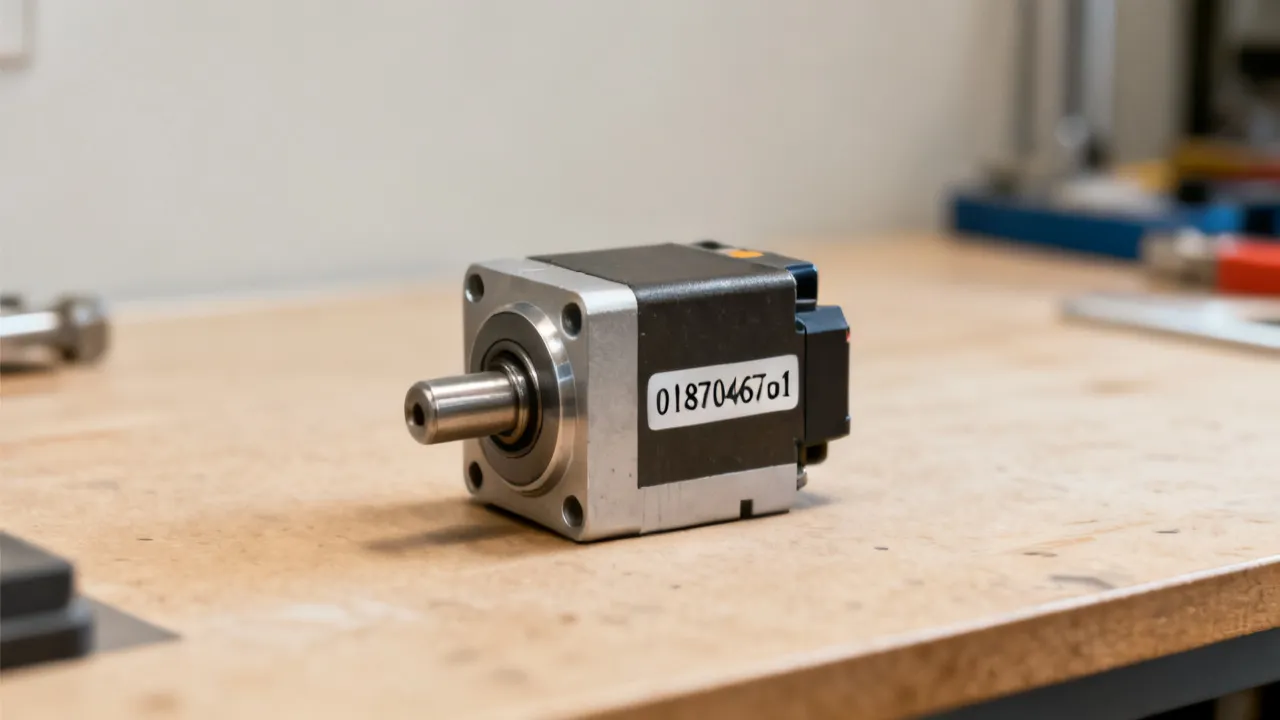
This guide explains how to interpret the supplier identifier 01870467o1, why precision matters in parts sourcing, and how to validate fit, compatibility, and documentation before purchase. The article provides objective background on identification codes and purchasing risk, outlining practical evaluation steps, common compliance expectations, and targeted FAQs for buyers.
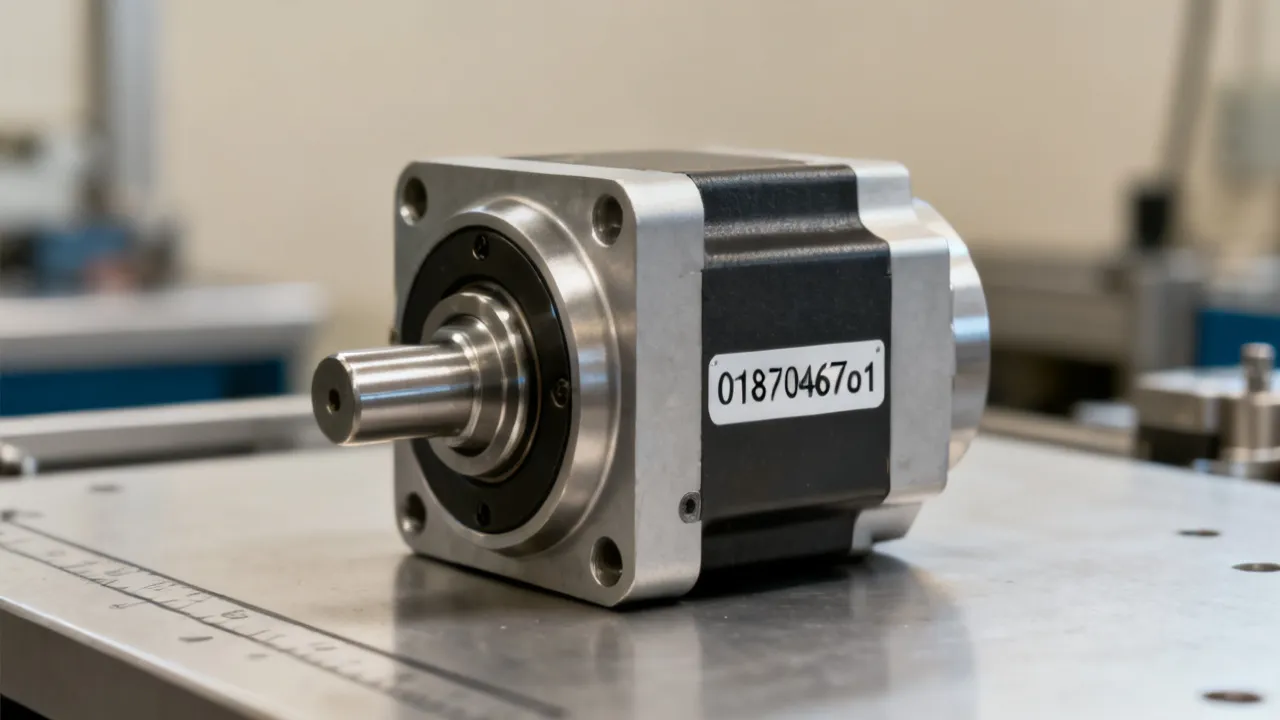
This guide explains how to evaluate the supplier and commercial considerations tied to “01870467o1” procurement. Objectively, the keyword “01870467o1” functions as an item identifier used in sourcing and inventory traceability, while “supplier” and “price” factors reflect contract terms, lead times, and documentation quality. The article outlines practical decision steps and requirements.

This guide explains how to interpret contact reference 04933245347 and evaluate supplier sourcing options with objective criteria. It outlines what such identifiers typically indicate in purchasing workflows, then details decision factors buyers should use when assessing lead times, documentation, quality checks, and communication expectations.

This guide explains Viamar Diadema and helps you evaluate options based on practical pricing, supplier reliability, and purchasing requirements. Objectively, Viamar Diadema is examined as a product concept within a broader procurement context, where specifications, availability, and after-sales support matter. You’ll also find an expert checklist and FAQs to support confident decisions.

