This guide explains how to evaluate products and services associated with 😈 by focusing on pricing logic, credible suppliers, and practical sourcing steps. Objectively, the “😈” keyword is used here as a marker for a category of offerings that varies by specs, compliance level, and supply chain. You’ll learn what to verify, how to compare quotes, and which requirements typically matter for procurement decisions.

If you’re trying to buy or evaluate products/services linked to the “😈” keyword, your first priority should be verifying scope and compliance before price. In many industries, two listings that look identical on the surface can differ materially in materials, safety standards, warranty coverage, lead time, installation requirements, quality controls, and after-sales support—factors that strongly influence total cost of ownership, project schedules, and even regulatory exposure.
Start by requesting itemized quotations, confirming relevant certifications and testing documentation, and clarifying delivery/return terms. Only after those checks should you compare the “price” you see on the market, because the lowest quote often hides additional requirements (installation, validation, commissioning, site readiness work, shipping surcharges, documentation fees, optional add-ons that are actually mandatory for compliance, or “lead time” assumptions that don’t match your timeline).
For suppliers, credibility is typically demonstrated through documented capabilities: production or service capacity, quality management system references, and evidence of past fulfillment. Where “supplier details” are provided, treat them as a starting point—not proof. Ask for traceable documents that match the exact SKU, batch, model, configuration code, or service scope. If you’re comparing multiple vendors, require consistent evidence so your evaluation stays objective and defensible.
Finally, keep in mind that the exact meaning of the keyword cluster you provided (including isolated symbols like '' '' '' and 😈) may represent either branding, a community shorthand, a product family label, or internal categorization. Your job as a buyer is to translate that label into concrete specifications, obligations, and measurable acceptance outcomes.
In practice, the “critical” part of “critical sourcing checklist” means you should treat every “😈” label as incomplete information until proven otherwise. Symbols and emoji-based category tags can function as marketing shortcuts. They can also reflect packaging/variant differences that matter to performance, safety, and compliance. Therefore, the checklist must push you toward verifiable specifics: documents, tests, data, and contract terms.
In procurement, price differences usually come from a handful of drivers. If you can identify which driver is responsible for a quote spread, you can compare intelligently instead of instinctively rejecting anything that isn’t the cheapest or blindly accepting anything that is the most expensive.
Common drivers include:
To compare fairly, request a quote that breaks cost into line items (base unit, configuration, compliance/testing, shipping, installation/commissioning, training, documentation packs, and post-sale support). Then compute effective cost by adding total expected expenses over the warranty/service period—not only the initial invoice.
Also pay attention to time value. A cheaper offer that arrives late can create additional costs: idle labor, rescheduling of dependent tasks, missed production windows, penalties for late delivery to your own customers, or costs to maintain interim replacements. Conversely, a slightly higher vendor price may reduce schedule risk if the vendor can reliably meet lead times.
Another overlooked driver is risk allocation. Quotes can differ in how they handle failures, defects, returns, and warranty claims. Some vendors price low but shift risk to you with narrow warranty terms or restrictive conditions for claims. Others price higher but include more favorable remedies, such as replacement within a defined time window, no-charge diagnostics, or structured root-cause reporting.
Because “supplier details” can be presented in many formats—some persuasive, some vague—a structured verification approach protects you from misalignment. Industry professionals typically evaluate vendors across four key dimensions. These dimensions can be turned into a scorecard, which makes procurement discussions less subjective and more consistent.
When you see a vendor claim that a product or service “matches” the “😈” category, ask: What documents map to that match? For example, request a product datasheet, compliance statements, test summaries, calibration certificates (if applicable), and any compatibility matrix relevant to your use case.
Additionally, don’t treat documentation as a box-checking exercise. Your due diligence should ensure the documents are:
For services, due diligence also includes process maturity. You want to know what the vendor actually does operationally: what templates they use, how they document results, what escalation path they follow, how they handle deviations, and how they ensure consistent delivery quality across projects.
The symbols and quoted placeholders you provided (such as '' '' '' and the standalone 😈) may not function as conventional technical keywords on their own. In practice, they often represent:
Objectively, the right way to proceed is to treat these tokens as search handles, then translate them into explicit parameters. For example, if the listing implies a “type” associated with 😈, you should still verify exact model number, feature set, materials, performance metrics, interface specifications, software/firmware levels, and documentation.
A professional buyer approach is to convert the keyword into an internal procurement artifact. That means: you take the symbol-based listing, and you build a “requirements translation” document that includes at least the following fields:
If you do not have that translation step, you are comparing marketing labels rather than procurement objects. In the long run, that increases both financial risk and schedule risk.
Below is a practical approach used in procurement and vendor management. It’s designed to help you stay objective, reduce risk, and avoid late-stage surprises—especially when a listing uses ambiguous category tags such as 😈 or placeholders such as '' '' ''.
| Stage | What to do | What to look for | Common pitfalls |
|---|---|---|---|
| 1. Define scope | Write a one-page requirement summary that states what you need and why. | Clear specs, compatibility notes, and acceptance criteria. | Using only the keyword “😈” without mapping it to parameters. |
| 2. Request itemized pricing | Ask for quotes broken into components. | Base cost, compliance/testing, lead time, shipping, warranty, and support. | Comparing totals that include different inclusions. |
| 3. Verify supplier documentation | Request evidence tied to the exact offering. | Certifications, inspection reports, datasheets, and traceability. | Accepting generic certificates not linked to the specific SKU/batch. |
| 4. Validate delivery and service terms | Confirm lead times and service commitments. | Delivery schedule, penalties/credits (if any), and response times. | Assuming “standard shipping” without confirming method and timeline. |
| 5. Pilot or sample (if applicable) | Where risk is high, request a test sample or limited pilot. | Measured performance and documented acceptance. | Skipping trials when the “😈” category may hide variant differences. |
| 6. Final comparison using objective scoring | Score vendors using the same criteria and weights. | Quality evidence, total cost of ownership, lead time reliability, support. | Choosing based solely on lowest “price.” |
To make this workflow operational, you should assign ownership for each stage. For example, procurement often owns the commercial terms; engineering/technical staff own specification translation and acceptance criteria; and compliance/security may own verification of regulatory documentation.
If the procurement is cross-functional, use a shared template for vendor responses. That way, vendor A cannot provide fewer details and still “look comparable” when you compare them later. A consistent template also reduces negotiation friction because you can directly point to missing items and request clarifications quickly.
Before you negotiate, define the conditions/requirements that will govern the transaction. Industry top practice is to make these requirements explicit to avoid ambiguity later:
If the vendor cannot meet these conditions, price reductions are rarely enough to offset the risk. A structured requirement set turns a keyword-based search into a defensible procurement decision.
One practical tactic is to include a “required evidence” appendix in your request for quotation (RFQ). For example, you can list the exact evidence items you expect:
In some sectors, the “evidence pack” is as important as the product or service itself. If your organization must pass audits, you cannot “prove later” that the right configuration was delivered unless the documentation and traceability exist up front.
In many marketplaces, keywords—including symbolic ones such as 😈—help sellers categorize their offerings quickly. Buyers, however, need technical alignment. This mismatch is common because:
To counter this, professionals focus on verification. The goal is not to “interpret” the symbol; it’s to confirm the underlying product/service characteristics and the supplier’s ability to deliver them reliably. Verification includes validating both the “what” (specs and features) and the “how” (quality systems, testing practices, and delivery execution).
It also includes checking whether the vendor’s offering is consistent across time. A vendor can provide a one-time perfect configuration for a past project, then shift materials, suppliers, or software versions later while continuing to use the same category label 😈. That is why a robust process requires traceability and change-control obligations in the contract.
When you need to validate claims (quality systems, regulatory alignment, testing practices, and supply chain expectations), use reputable references such as:
For general supplier risk and procurement top practices, organizations often referenced include the OECD for responsible business conduct due diligence guidance and ISO standards families for quality management principles. These are typically used as baseline references rather than “guarantees” of specific vendor performance.
To apply these references effectively, you should connect them to what you actually require. For example:
In other words, the references guide your questions, but your contract and evidence requirements determine whether the vendor is accountable.
On its own, the 😈 symbol usually functions as a category label, branding cue, or marketplace shorthand. Procurement decisions should not rely on the symbol’s meaning; instead, map it to concrete specs, documentation, and service scope before comparing price.
In some cases, the same symbol might appear across multiple product families with different technical characteristics. In other cases, sellers use the symbol as a “maturity level” or “recommended fit” tag for a certain customer segment. Therefore, treat the emoji as an index to start a search—not a definition.
Request itemized quotations and confirm what is included: compliance/testing, shipping method, warranty length, installation/commissioning, documentation deliverables, and support. Compare total cost of ownership using the same acceptance criteria.
Also compare the timelines and the risk boundaries. A quote that includes replacement parts at no charge for a defined period may appear more expensive initially but can reduce long-term costs. Conversely, a quote that appears cheap may exclude critical compliance documentation or place strict limitations on warranty claims.
Focus on traceable evidence tied to the exact offering: datasheets, certification references, inspection or test summaries, service-level commitments, and clear contract terms. Verify that documents correspond to the exact SKU/configuration linked to the 😈 category.
If possible, validate at least one of the following:
Not always, but they often signal differences in scope, documentation, or support. The professional approach is to identify what you’re not receiving (e.g., reduced warranty, longer lead times, missing compliance packs) and factor those differences into your effective cost and risk evaluation.
A helpful mindset is to consider what a quote does not include. When a vendor omits a critical document or service in a way that is not obvious from the listing, the cost may reappear later as change orders, delays, rework, or claims handling friction.
Include acceptance criteria, delivery terms, warranty/support obligations, documentation requirements, change control rules, and remedies or escalation procedures. These conditions help ensure alignment between what you asked for and what you receive.
You can also add:
Use placeholders as search prompts only. Ask the supplier for the actual product/service identifiers—model numbers, configuration codes, specification sheets, or service statements—so evaluation can be objective and repeatable.
To make this easy for yourself, draft a short list of “identifier requests” you send to vendors:
If performance, safety, or compatibility risk is meaningful, a sample or limited pilot can reduce uncertainty. Where the “😈” label might conceal variant differences, controlled testing is often the very practical way to confirm fit.
For some categories, samples can also confirm packaging integrity, labeling requirements, and documentation completeness. For services, a pilot might validate process quality: can the vendor deliver on schedule, document results properly, and respond to issues with adequate competence?
Timelines vary based on the complexity of documentation and lead times. However, the top practice is to align early: confirm scope, request documentation immediately, and set deadlines for quote clarifications so the process doesn’t stall.
If you build a standard procurement timeline—such as 1–2 weeks for documentation review, 1 week for technical evaluation, and 1 week for contract negotiation—you reduce the risk that an ambiguous symbol-based listing drags out evaluation. The sooner you demand concrete identifiers and evidence, the sooner you can decide.
Using a keyword like 😈 to find offers can be efficient, but it must be paired with disciplined verification. By prioritizing documented scope, supplier credibility, and itemized pricing logic, you can reduce procurement risk and make comparisons that stand up to scrutiny. Whether you’re evaluating a single purchase or building an ongoing supplier relationship, an objective workflow—supported by clear conditions and acceptance criteria—remains the very reliable path from search results to confident selection.
Note: You provided placeholders (e.g., '' '' '' and symbol-only tokens). This article treated them as category markers rather than assuming a specific technical definition. If you share the actual product/service type (and any relevant region-specific details), the article can be refined to reflect the exact evaluation criteria and vocabulary used in that domain.
If you’ve already read the foundational checklist above, the next step is to strengthen it into a repeatable procurement process. The aim is to prevent “label drift,” where the symbol-based category (😈) changes meaning between vendors or over time. The expansion below adds practical sub-checks you can embed into your RFQ, vendor scoring, and contract language.
The biggest failure mode in sourcing is treating the category label as a specification. To avoid that, you should translate the listing’s implied category into explicit parameters. Do it as early as possible and document the translation step internally.
Start with a “minimum parameter set,” which should include:
Then map each parameter to a question you send to vendors. For example, instead of asking “Does this match 😈?”, ask:
This translation step reduces subjective back-and-forth. It also protects you: if the vendor later disputes what was meant by “😈,” your translation artifact shows what you objectively requested.
Many vendors can produce certificates or documents. What matters is whether the documents are tied to the specific identifier you are purchasing. To improve traceability, require an “evidence pack” built around identifiers.
For product purchases, require:
For services, require:
Make “tied to identifiers” a hard requirement. For example, instruct vendors that documents must specify the model/SKU and batch/lot (or serial range) corresponding to your order. If that is not possible for the current context, require a documented rationale and an alternative approach that provides traceability.
The earlier checklist mentioned effective cost. To elevate that into a structured comparison, create a TCO template with at least these line items:
Then evaluate quotes using a consistent weighting scheme. For example, you can score each vendor on:
This approach ensures that a vendor charging slightly more but providing significantly better documentation, faster support, and broader warranty coverage is recognized as a better procurement outcome—even if the sticker price is higher.
Lead time is not just “days to ship.” For procurement, lead time should be expressed as a timeline with events. If the listing is vague, you should force clarity.
Define events such as:
Require the vendor to confirm each event with a date or a window. Also require that if dates slip, the vendor states how they will handle it (expedite fees, schedule recovery plan, or credits/penalties where appropriate).
Schedule clarity reduces the risk that a low-cost quote includes unrealistic assumptions. For example, a vendor may show a “standard lead time” that assumes stock availability, but your order is not eligible for that stock route. Make sure they confirm your order’s actual path.
Warranty scope and remedy terms can materially change the risk profile. When comparing offers connected to 😈 labels, you should not merely compare warranty duration; compare the warranty’s coverage boundaries and remedy process.
Key warranty questions include:
Compare these systematically across quotes. It is possible for a cheaper quote to have a shorter warranty but with better remedy terms. Conversely, a longer warranty might still be poor if claims are delayed, spares are unavailable, or exclusions are too broad.
Documentation isn’t always delivered automatically. If the listing uses a category label (😈) rather than a standardized spec sheet, documentation completeness becomes a risk.
Make documentation requirements explicit:
For regulated contexts, the “who signs the document” also matters. Require vendor-authorized signatories and ensure the document type matches regulatory expectations where applicable.
Acceptance criteria should be measurable and agreed in advance. A common pitfall is when vendors define acceptance as “satisfactory operation,” which is subjective. For 😈-tagged listings, you should insist on explicit criteria that reflect your procurement requirements.
An acceptance testing plan can include:
Also specify who performs acceptance testing. If you assume the vendor tests but the vendor assumes you test, you can end up with delays and disputes. Make responsibility explicit.
Silent changes can be a hidden cost. A vendor might use the same category label 😈 for a product family but quietly substitute components, materials, or software revisions based on supply availability. This can invalidate test evidence and create compliance gaps.
Add change-control requirements such as:
For services, change control also matters. The vendor might propose a different methodology midstream. Require approval for deviations that impact deliverables, acceptance criteria, or compliance documentation.
Many procurement failures happen because an item “matches” the category label but not the integration context. For example, a product may be compatible with some systems but not the specific version or environment you use.
To mitigate this, require the vendor to provide:
If the vendor cannot provide a compatibility matrix, you can require a written confirmation of compatibility for your stated environment, supported by test evidence or a documented risk assessment.
When a vendor claims capability, ask who actually performs the manufacturing or service. Subcontractor involvement can be legitimate, but you need visibility to ensure quality controls are applied consistently.
Request disclosure of:
Also ask about how subcontractors are managed: do they follow the same quality management system? Are they included in acceptance testing? Are their deliverables traceable to your identifiers?
Support is often where low-cost quotes become expensive. When comparing vendor quotes for 😈-tagged offerings, require details like:
For critical operations, consider requiring a support plan as part of the contract—especially if downtime is costly.
When high risk exists, a sample/pilot can reduce uncertainty. But pilots often fail because they’re not structured. If you request samples tied to the 😈 category, your pilot should include objectives, test methods, and acceptance criteria.
To structure a pilot:
Also ensure that the sample configuration is truly representative of the final shipment. Require evidence that the sample is from the same production configuration and that any deviations are disclosed.
One of the best ways to avoid “bias” is to use a scoring matrix with predefined weights. If procurement is audited internally or externally, you want to demonstrate that your decision followed criteria.
A scoring matrix can include:
Set weights based on your project risk. For example, if compliance is critical, documentation and compliance evidence should carry high weight. If schedule is critical, lead time reliability should carry high weight. If downtime is critical, support strength should carry high weight.
Then ensure that scoring is based on evidence, not impressions. If documentation is missing, that should reduce score—regardless of how confident the vendor sounds on a call.
Price comparisons matter, but contracts determine what happens when things deviate from expectations. For 😈-tagged listings, where the symbol may not fully define the offering, contract clarity becomes especially important.
Make sure the agreement includes:
Many disputes begin because the scope is not precise or because remedies are not clear. If you can’t define what “pass” means, you can’t enforce quality.
Even if the purchase goes perfectly, operational readiness can fail if you didn’t plan for it. Include post-delivery tasks in your plan:
Operational readiness is part of procurement discipline. It reduces the chance that your team will “make do” with missing documentation or missing accessories because the project schedule is pressured.
Below are practical questions you can send verbatim to vendors. These questions are designed to pull concrete information out of ambiguous category labels.
Sometimes vendors respond with confidence but cannot provide traceable evidence. You should not simply accept that. Instead, determine whether you can proceed under a risk-based approach or whether you must reject the quote.
Create a decision rule. For example:
This rule-based approach prevents you from being “talked into” proceeding. It also protects you in the event of an audit or later dispute.
If you regularly source items tagged with category labels like 😈, you can improve your RFQ/RFP template so it forces clarity. Your template should include:
You can also include a vendor response format requirement: vendors must respond in the same structure as your template. If they don’t, you can treat that as incomplete response and disqualify or reduce score.
Symbol-based category tags introduce unique pitfalls compared to listings with standardized part numbers. Common pitfalls include:
To counter these, you need strict evidence ties and contract clarity. Emoji category tags should be treated as an index to verify—not an accepted definition.
Even without knowing your exact product/service category, you can set standards for evidence quality.
Good evidence:
Bad evidence:
If you adopt a strict “evidence quality” standard, you avoid the worst procurement outcomes associated with ambiguous category tags.
In summary, the symbol 😈 should not be treated as knowledge—it is a trigger for verification. You can make your sourcing process stronger by:
Once you implement these practices, emoji/symbol categories become less risky and more useful. You get the speed benefit of keyword discovery, without paying the price in disputes, schedule delays, or compliance gaps.




This guide explains how to evaluate 😈-related products responsibly by focusing on pricing transparency, supplier quality controls, and documented compliance. In objective terms, the keywords relate to risk-aware procurement, due diligence, and verification practices. You’ll learn what to check in quotes, how to interpret supplier claims, and how to set practical requirements before any purchase decision.
This guide explains how to evaluate products and services associated with 😈 by focusing on pricing logic, credible suppliers, and practical sourcing steps. Objectively, the “😈” keyword is used here as a marker for a category of offerings that varies by specs, compliance level, and supply chain. You’ll learn what to verify, how to compare quotes, and which requirements typically matter for procurement decisions.
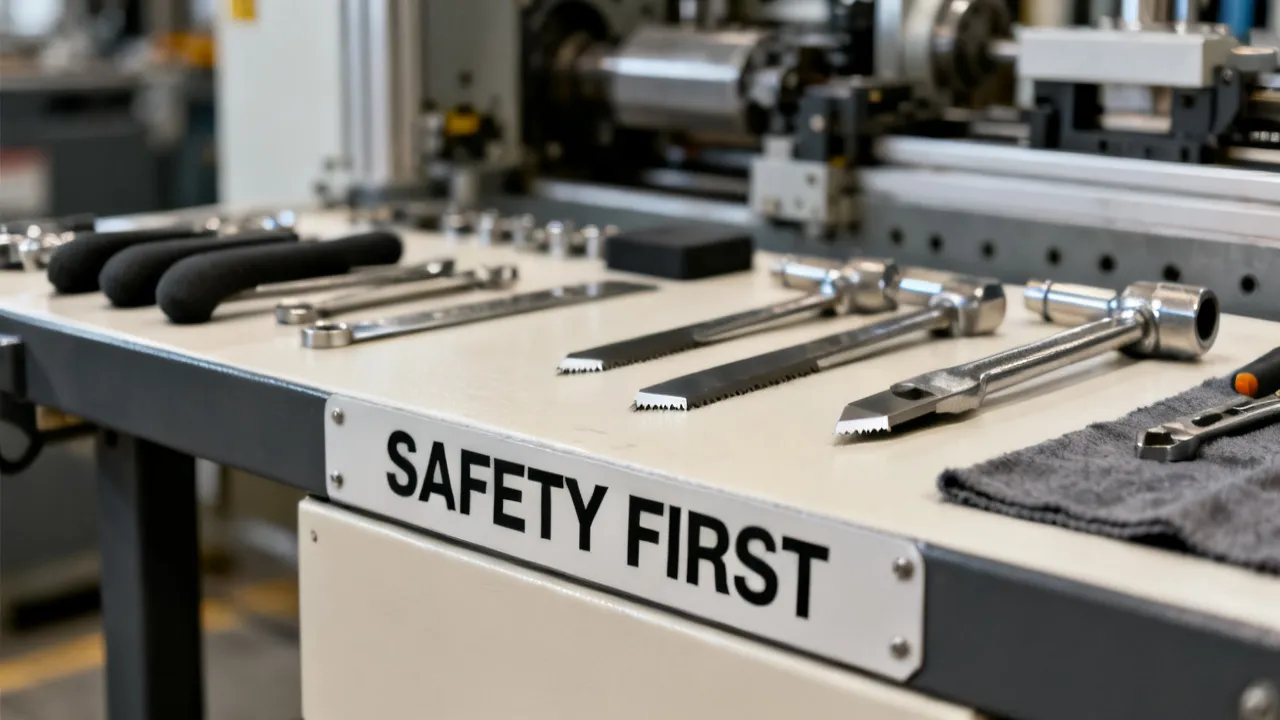
This guide explains how to approach specialized, high-risk procurement workflows with due diligence, supplier validation, and cost controls. The keywords point to boundary-crossing risk signals and demand careful compliance. Objectively, such procurement requires documented sourcing, clear requirements, and verifiable technical stewardship rather than informal shortcuts.

This guide explains how to evaluate supplier options for item 750816, covering sourcing criteria, quality checks, and practical procurement steps. Objectively, “keywords” such as supplier, sourcing, procurement, and product evaluation describe how buyers compare origin, documentation, lead times, compliance, and cost drivers without relying on promotional claims.

This guide examines Edeni loronha through an objective lens—its positioning, typical sourcing considerations, and how to evaluate supply reliability and pricing logic. Background context explains what “Edeni loronha” can signify in consumer searches and why buyers often look for consistent quality. It also outlines practical selection criteria and FAQs to support informed decisions.

Edeni loronha sourcing and pricing is top approached through a structured evaluation of suppliers, documentation quality, and cost drivers. This guide objectively explains what the keyword may represent in procurement conversations and how buyers typically validate items through traceability, packaging standards, and service terms, without assuming availability or performance claims.

