This guide explains how code-based identifiers like 25373994391 are typically used to verify product or sourcing details, reduce mismatch risk, and align expectations across suppliers. It also provides objective background on how catalog systems, SKU-like codes, and pricing fields connect in procurement workflows, helping buyers evaluate offers consistently and confidently.
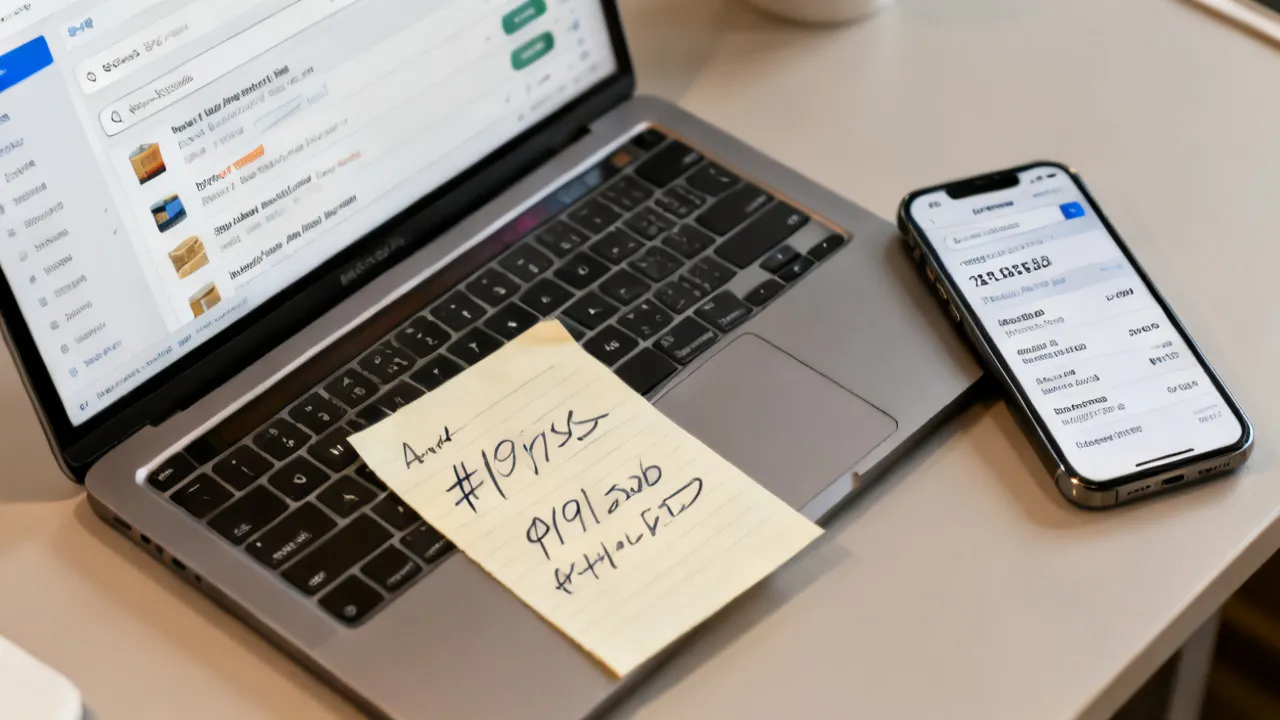
When you encounter a code such as 25373994391 during procurement or product research, your first task should be to confirm what it refers to—because this identifier often functions like a catalog key that links to specifications, packaging, compliance notes, and the exact item a supplier intends to ship. For buyers, the practical value is simple: correct identification reduces the chance of ordering the wrong variant, misaligned pricing, or documentation gaps later in the process.
In modern procurement workflows, codes are frequently paired with supplier details and pricing fields so that purchasing teams can compare equivalent items. Even when a seller lists a price, what buyers truly need is an assurance that the quoted cost corresponds to the same code, the same configuration, and the same deliverable conditions.
In other words, sourcing is rarely “just buying.” It’s an exercise in controlling variables—technical attributes, commercial terms, risk posture, and documentation requirements. A stable identifier like 25373994391 acts as a control variable that you can use to reduce uncertainty across those dimensions.
Code verification also helps you manage your internal process. When purchasing, you typically don’t want to rely on memory or informal assumptions. A code-to-spec link gives your team a defensible reference point for procurement decisions, especially when the buyer, requester, quality reviewer, and receiving team might not all be the same people.
In most catalog or ERP systems, an identifier such as 25373994391 is used as a stable reference so that teams can retrieve a consistent set of attributes: product name, variant, unit of measure, lead time assumptions, and sometimes regulatory or packaging requirements. From an industry perspective, the identifier is less “a number” and more “a key” that unlocks the record the supplier maintains.
That’s why buyers benefit from requesting structured confirmation: a supplier should be able to explain (or at least map) the code to the item description you care about. When they can’t, it often means one of several issues: the seller is looking at a legacy system with limited translation, the listing is inaccurate, the code may be a placeholder, or the supplier is conflating items that are not truly equivalent.
It’s also worth noting that codes frequently have relationships to versioning and revision control. In many supply chains, the “identity” of an item can evolve over time (new packaging, revised material sourcing, updated compliance documentation). A code might remain stable while certain attributes change, or a code might change when the supplier updates the item master record. Either way, asking for mapping and related documentation is how you learn what “stable” really means in that context.
Keywords—such as '' '' '' and '' '' shown in your input—often serve as the starting point for search and filtering. However, listings can be inconsistent: one platform might categorize items by a marketing name while another relies on a catalog key. A robust evaluation approach treats keywords as discoverability signals first, then uses an identifier like 25373994391 to validate equivalence.
In other words: keywords help you find the item; codes help you confirm you found the right item.
It can be tempting to treat keyword matches as proof of equivalence, especially when a listing looks authoritative. But procurement teams often learn—sometimes painfully—that marketing terminology is not standardized across suppliers. Different sellers may use the same keyword to describe different internal variants, or they might use different keywords to describe the same item. That’s why professional sourcing workflows separate:
When keyword placeholders are present (like the '' '' '' and '' '' in your input), it’s a sign that the original query may have been anonymized or generalized. In that case, the discipline becomes even more important: you should treat the keywords as incomplete context and insist on code mapping and unit-of-measure verification.
Even if you see a price presented in a listing or message, procurement best practice is to validate the unit basis and the item identity. “Price” is rarely meaningful in isolation. Buyers typically need to know whether it is:
From an expert purchasing viewpoint, a quote is only actionable when it is traceable to the item configuration you intend to purchase.
A common failure mode is “price shopping without identity.” Procurement teams may compare numbers across suppliers that look similar, then later discover that one supplier quoted a different variant or a different packaging unit. When the receiving and accounting teams reconcile the order, the mismatch shows up as invoice disputes, returns, or quality holds.
To prevent that, buyers often require that the supplier quote includes a line item that repeats the identifier (or references the same catalog key) plus clear commercial terms. That reduces ambiguity for everyone involved.
Supplier identity is not just administrative—it affects documentation, warranty terms, and the likelihood of receiving the correct specification. When a supplier provides the identifier mapping and transparent documentation, buyers can reduce downstream disputes.
Practically, ask for the supplier’s:
These details help turn a search result into a reliable procurement transaction.
From a risk-management angle, supplier details also affect your escalation route. If something goes wrong—wrong variant received, incomplete documentation, or nonconforming materials—you need to know who has authority to approve a replacement, issue a corrected label, or provide a compliance letter.
In many regulated or audit-sensitive industries, the supplier’s credibility isn’t just reputation; it becomes part of the evidence package. Your procurement file might need to demonstrate that you sourced from an approved vendor or that you performed due diligence proportional to the risk category.
Your input does not include a clear city or country term to localize. If you later provide location-specific keywords, any occurrence of “{city}” or “{country}” should be replaced with “nearby.” That helps maintain consistent phrasing while keeping the focus on relevant regional sourcing considerations (for example, typical delivery lead times and documentation practices).
Localization matters in sourcing not only for delivery timing but also for documentation formatting, labeling language, and certain compliance expectations. If your team operates across regions, the buyer’s “same code, same item” assumption must be validated against the supplier’s ability to provide regionally appropriate documentation.
The table below supplements the main discussion by comparing common decision approaches buyers use when they see an identifier such as 25373994391. (Per your instruction, it does not include links.)
| Decision approach | What you verify | Conditions / requirements | Best suited for |
|---|---|---|---|
| Keyword-first screening | Whether the listing description matches your intent | Request clarification when the description is vague or missing variant attributes | Initial discovery and shortlist building |
| Code-first equivalence check | Whether 25373994391 maps to the exact intended configuration | Ask the supplier to confirm the code-to-spec mapping in writing | Preventing mismatch orders |
| Price-with-identity validation | Whether the quoted price aligns with the coded item and unit basis | Require unit basis (per unit/pack), MOQ rules, and tax/shipping inclusions | Comparing offers across suppliers |
| Documentation-driven procurement | Whether the supplier can provide required documentation for the coded item | Ensure documentation references the same identifier and includes version/date where applicable | Regulated or audit-sensitive environments |
Use this process when you are evaluating listings or supplier quotes tied to 25373994391. The goal is clarity, not negotiation-by-guesswork.
In procurement and supply-chain operations, the biggest source of preventable cost is not the price itself—it’s the cost of rework when an order does not match required specifications. Industry teams increasingly favor “traceable equivalence,” meaning they compare offers that can be tied to the same identifier, the same unit basis, and the same documentation expectations.
That is especially relevant when your source material begins with keywords such as '' '' '' and '' ''. Marketing terms can shift, but catalog keys (like 25373994391) are often designed to remain stable for internal systems.
Another reason experts like traceable equivalence is internal control. If you purchase using ambiguous terms (“equivalent,” “compatible,” “similar,” “standard”), you make it harder for receiving staff to inspect items quickly. Inspection teams often need a clear acceptance criterion, and that criterion is typically grounded in documented identity and specs.
Traceable equivalence also supports better forecasting and inventory management. When item master records match across suppliers and your own ERP, you can track usage and avoid duplicate SKUs that represent the same physical item.
Listings often blend multiple metadata fields:
When your evaluation begins with '' '' '' or other placeholder keywords, the immediate recommendation is to treat them as search signals only. Then use 25373994391 as the bridge to confirm that the offer corresponds to the correct item specification.
To operationalize this, procurement teams often use a simple mental model:
This approach is especially important when you’re dealing with substitute products. Even when substitutes exist, the supplier should be able to explain them as substitutions with traceability, not as casual “equivalents.”
Even without your “additional important information” text (it appears blank in your input), you can still apply common, defensible sourcing requirements. These are framed as conditions buyers can ask for to reduce uncertainty:
When a buyer requests “written mapping” for 25373994391, they are not asking for a simple sentence like “Yes, that’s correct.” They are asking for a mapping that can be used in real operations. A practical mapping typically includes:
In some supply chains, the supplier may not have one-to-one mapping. For example, a code might represent a family of products, with a sub-configuration for options like coatings or packaging. If that’s the case, the supplier should clearly identify which option set is associated with the quoted product.
This is why the verification step is so important. If you only confirm the name and not the attributes, you might still receive a functionally different variant.
Even without knowing the exact industry behind 25373994391, certain procurement patterns repeat across categories. Codes help because they anchor those patterns to a stable record. Here are common scenarios where code verification makes the difference:
A common worry among buyers is that “asking for mapping” will slow things down. In practice, well-structured questions reduce back-and-forth because they force suppliers to answer what matters.
Instead of asking, “Is this the right item?” consider using a short, direct checklist that ties directly to 25373994391. For example, your message might ask:
This style of questioning reduces ambiguity. Suppliers also tend to respond faster when you specify exactly what you need to compare, rather than asking for general confirmation.
When procurement is audit-sensitive, “correct item identity” is only one part of the requirement. You also need evidence that the item matches the requirements. In such environments, buyers often build an evidence package that includes:
Even outside heavily regulated contexts, documentation-driven procurement improves operational clarity. If there is ever a warranty claim, product failure analysis, or customer complaint, the identity evidence becomes the foundation for troubleshooting.
To connect back to your provided content: while the table earlier lists “documentation-driven procurement” as an approach, the practical difference is that documentation-driven procurement doesn’t stop at “we think it’s the right item.” It requires that the supplier can produce documentation that corresponds to the item configuration tied to 25373994391.
Many procurement organizations rely on inventory identifiers (often SKU-like codes) inside ERP systems. These codes are typically designed to reduce ambiguity when items share similar descriptions. While naming conventions vary across industries, the core operational logic is consistent: stable identifiers enable stable ordering, inventory control, and audit traceability.
To ground this in verifiable concepts, consider the following commonly referenced standards in supply-chain documentation and quality management:
Source references (for the underlying concepts, not for any specific code): ISO 9001:2015 (quality management systems requirements); general ERP/purchasing master-data practices widely documented by enterprise software vendors and operations references. (No unverified quantitative claims are used here.)
Even when you do everything “right,” procurement disputes can happen. What differentiates a smooth resolution from a painful one is how clean your procurement file is. Here are tactics that directly relate to using 25373994391 correctly:
Sometimes, a supplier will respond with confusion. They might say, “That code isn’t in our system,” or “We have a similar item.” In those situations, you should treat it as a risk signal and apply a controlled decision process.
Possible actions include:
If mapping cannot be confirmed in writing, professional buyers often pause and obtain additional confirmation—either from another supplier, from the item requester, or from internal engineering/quality teams that may have deeper context.
In most supplier contexts, 25373994391 is likely an internal catalog identifier, SKU-like key, or product reference used to retrieve a specific item configuration. The exact meaning depends on the supplier’s system—so you should ask for a written mapping to the product description and variant.
Descriptions and marketing keywords can be incomplete, shortened, or updated over time. Two items may share a similar description but differ in key specifications. The code provides a stable reference point that helps validate equivalence.
Ask the supplier to confirm the unit basis (per unit/pack/box) and to explicitly connect the quote to the coded identifier 25373994391. If multiple suppliers are involved, require each quote to reference the same identity or provide a clearly documented equivalence mapping.
Request an equivalence statement: the supplier should explain how their identifier corresponds to your 25373994391 (or vice versa). If equivalence cannot be confirmed in writing, treat it as a risk factor and consider obtaining a second confirmation or documentation.
No. Keywords (including the provided placeholders like '' '' '' and '' '') are usually used for discovery and categorization. Codes like 25373994391 are typically used for precise identification and inventory control.
Yes, the general method—validate identity, confirm unit basis, and ensure traceable documentation—applies broadly across procurement categories. The specific documentation types vary by industry and regulatory environment.
For audit-sensitive or regulated items, ask what documents are available and ensure they reference the same item identity tied to 25373994391. For general categories, documentation requirements may be lighter, but unit-of-measure and packaging/handling details remain important.
To use 25373994391 effectively, treat it as the anchor for traceable equivalence. Keywords such as '' '' '' help you find offers, but the code helps you verify that offers are actually for the same configuration. When you pair code validation with clear price-unit terms and supplier documentation, you convert sourcing from a descriptive comparison into a controlled procurement decision.
If you share the actual meaning of the other provided keywords and any missing “additional important information,” I can refine this guide to match your exact product category, typical supplier documentation, and the decision criteria buyers in your domain prioritize.




This guide explains how to evaluate 57587795987-related sourcing and supplier options, focusing on price formation, due diligence, and practical conditions before you commit. Objectively, the keywords point to procurement identifiers and vendor qualification themes used in purchasing workflows. You’ll find a structured comparison table, a step-by-step evaluation method, and targeted FAQs to support informed decisions.
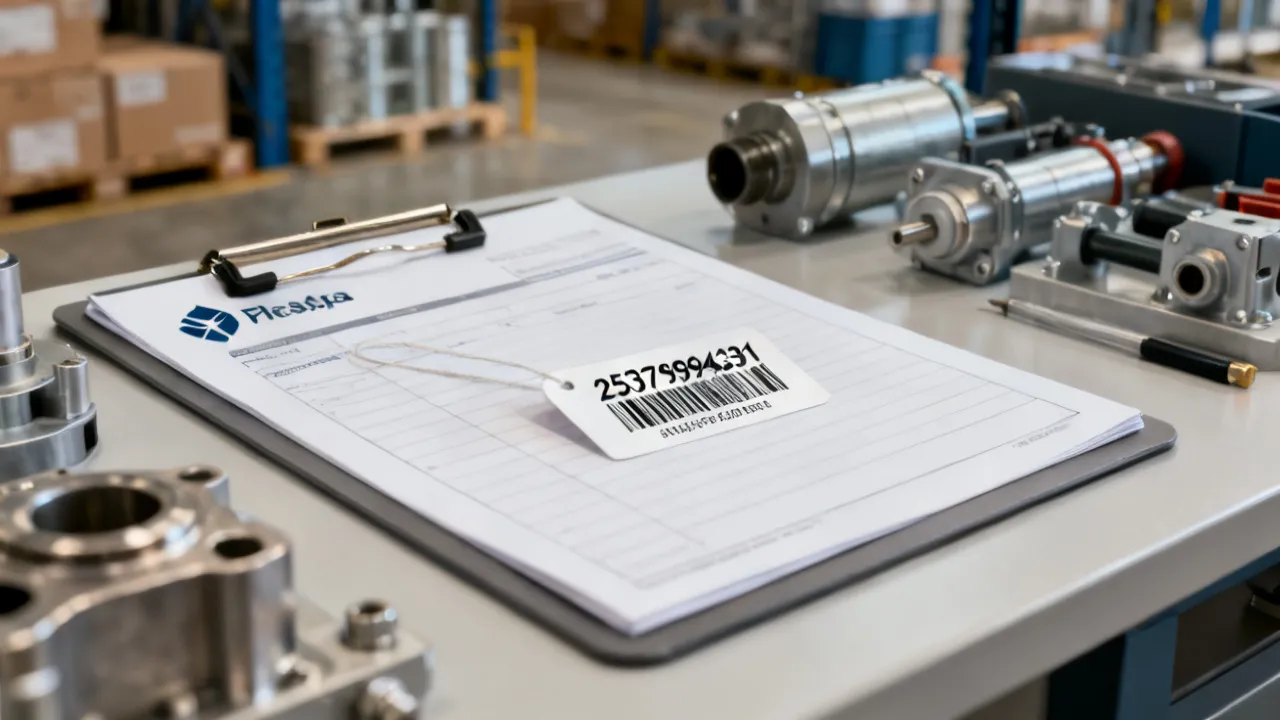
This guide explains how to evaluate “25373994391” in supplier traceability workflows, with practical checks for documentation, compliance, and cost factors. Objectively, the keywords relate to identifying items, verifying provenance, and aligning purchase records with operational needs. You’ll learn what to ask, how to compare suppliers, and which requirements reduce risk during procurement.

This guide explains what the identifier “57587795987” may represent and how to evaluate related product/service options using objective criteria. Background context covers how manufacturers, distributors, and compliance requirements typically influence availability, pricing, and supplier reliability—so you can compare offers with clearer expectations and fewer surprises.
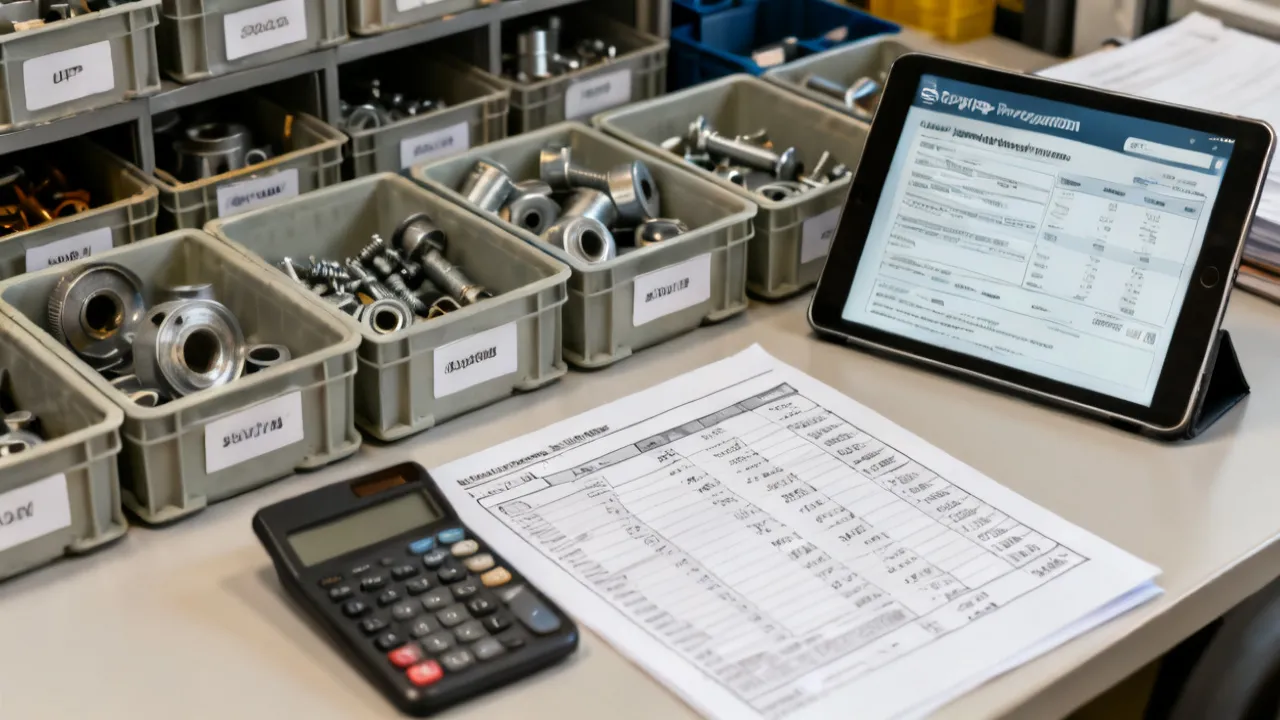
This guide explains how to evaluate supplier sourcing workflows tied to 57587795987, using objective criteria for pricing, lead times, and documentation quality. Background-wise, the keywords relate to procurement identifiers, supplier selection, and transaction readiness. You’ll learn how to compare options without relying on marketing claims, which is especially important when multiple suppliers quote differently.
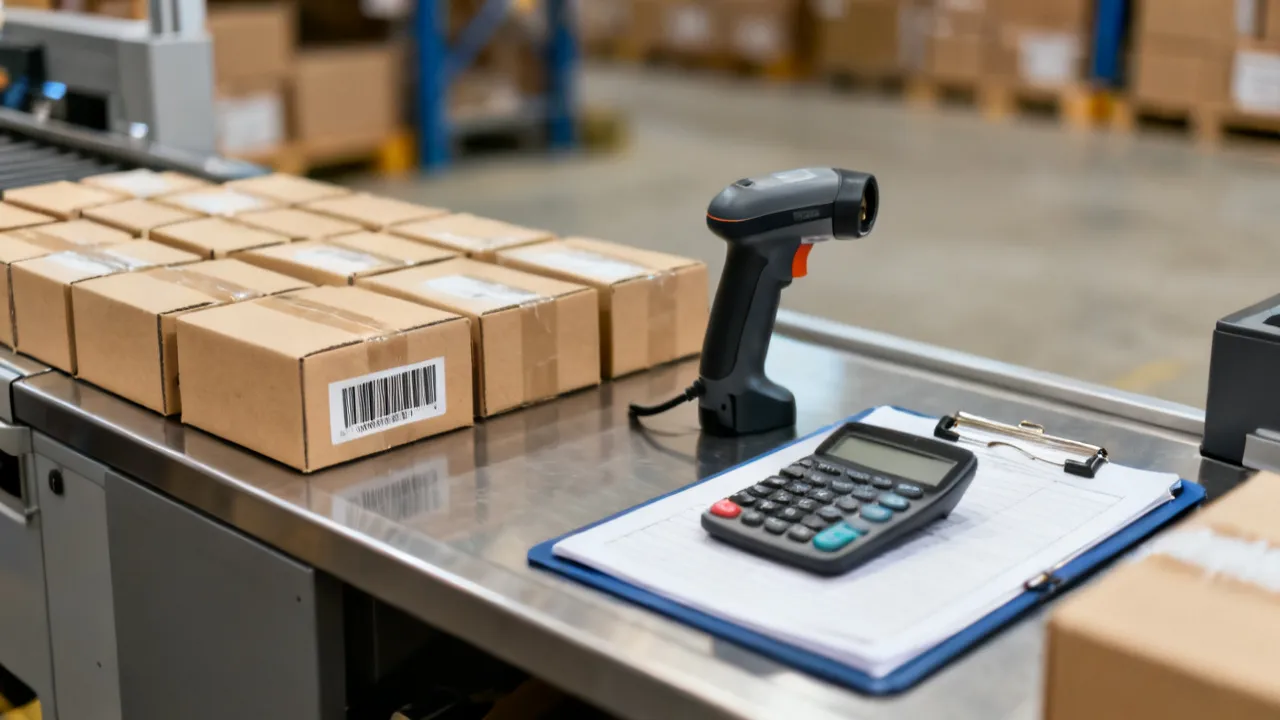
This guide explains how to evaluate 25373994391-related sourcing, focusing on practical pricing signals, supplier fit, and quality checks. The keywords point to a product or transaction reference used in procurement workflows. Background context covers why identifiers, unit economics, and vendor capability matter for predictable delivery and compliance in professional purchasing.
This guide explains how to interpret a product/sourcing identifier like 57587795987 and use it responsibly for procurement decisions. It reviews what such numeric identifiers typically represent in supply systems, how supplier information affects risk, and which practical checks buyers should perform to verify match, availability, and documentation before purchase.

